
Reimagined: What if we rebuilt our best work with today’s tools?

Over the next two months, we’re revisiting four pieces of work from our portfolio, flagship projects and client programmes we’ve delivered, and asking a simple question: how would we build this today?
The pace of change is real. The tools have moved on: AI, natural language interfaces, real-time pipelines, and better ways to ship prototypes into production. Work that used to take months can now move in weeks, if you’re clear on the user need and you design the system properly.
So, we’re reimagining four real problems we’ve tackled across sectors. Each one is rooted in messy, real-world constraints. Each one shows what “data intelligence, beautifully designed” looks like when you apply it to systems people actually rely on.
The point is not the tools. It’s the outcomes they now make practical: faster discovery, clearer decisions, and experiences people actually want to use.

Urban Ocean Lab: Turning a document repository into a knowledge engine
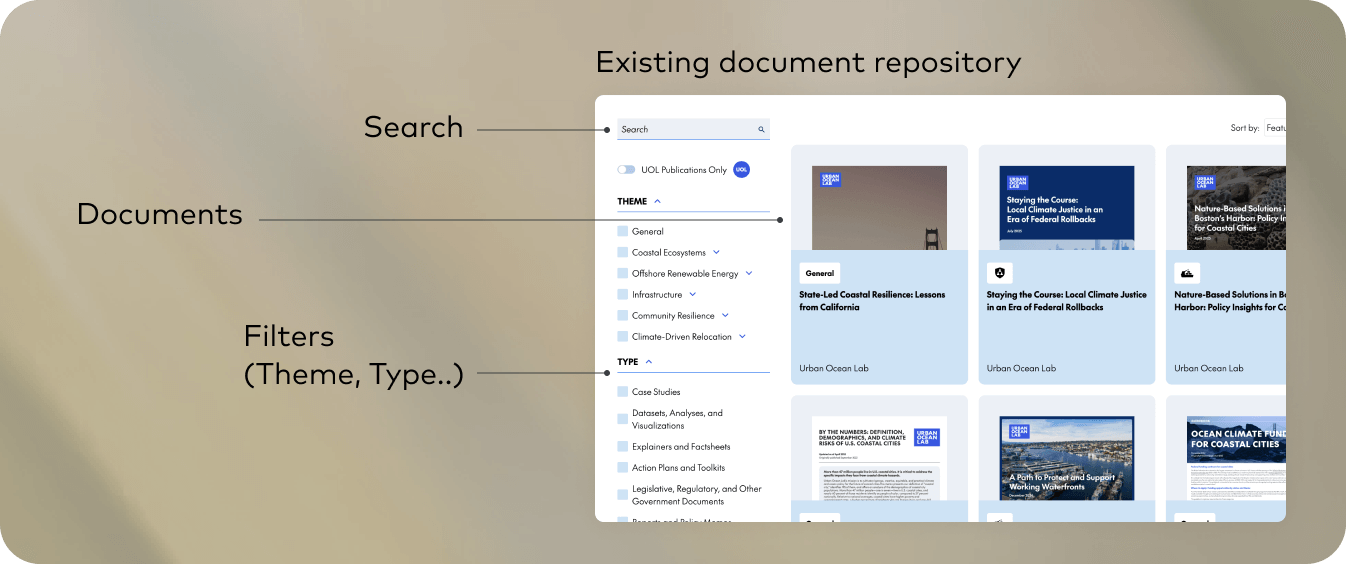
In 2023, we collaborated with Urban Ocean Lab to create a resources hub for coastal city policymakers. The platform surfaces hundreds of materials: datasets, case studies, research papers, designed to inform climate and ocean policy.
The challenge was not the quality of the content. Urban Ocean Lab had done the hard work of curating rigorous, practical research. The challenge was discovery.
How do you help a policymaker in Miami find the exact insight they need from a repository of 400+ documents?
The original solution was strong: clear categorisation, sensible tags, clean search. But it still assumes users know what they’re looking for. Often, they do not.
The problem isn’t unique
We’ve seen this pattern across sectors. The Partnership Against Child Exploitation faces the same challenge with protection research. Large organisations struggle with internal knowledge bases. Government departments sit on decades of policy documents that are hard to navigate.
The pain points are consistent:
- Vast repositories with minimal preview beyond titles
- Keyword search that misses context and meaning
- Users pushed to external links rather than receiving usable synthesis
- Hours of manual research to answer questions that should take minutes
The reimagination
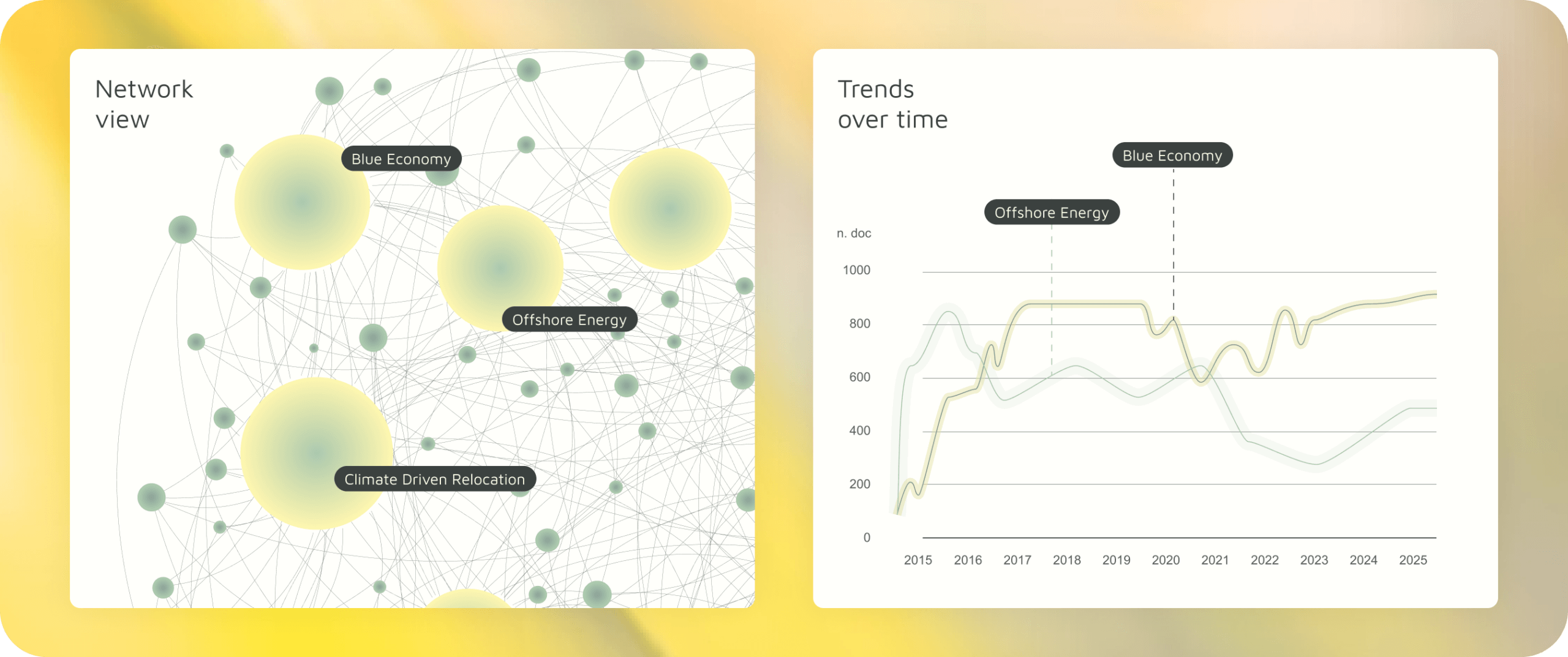
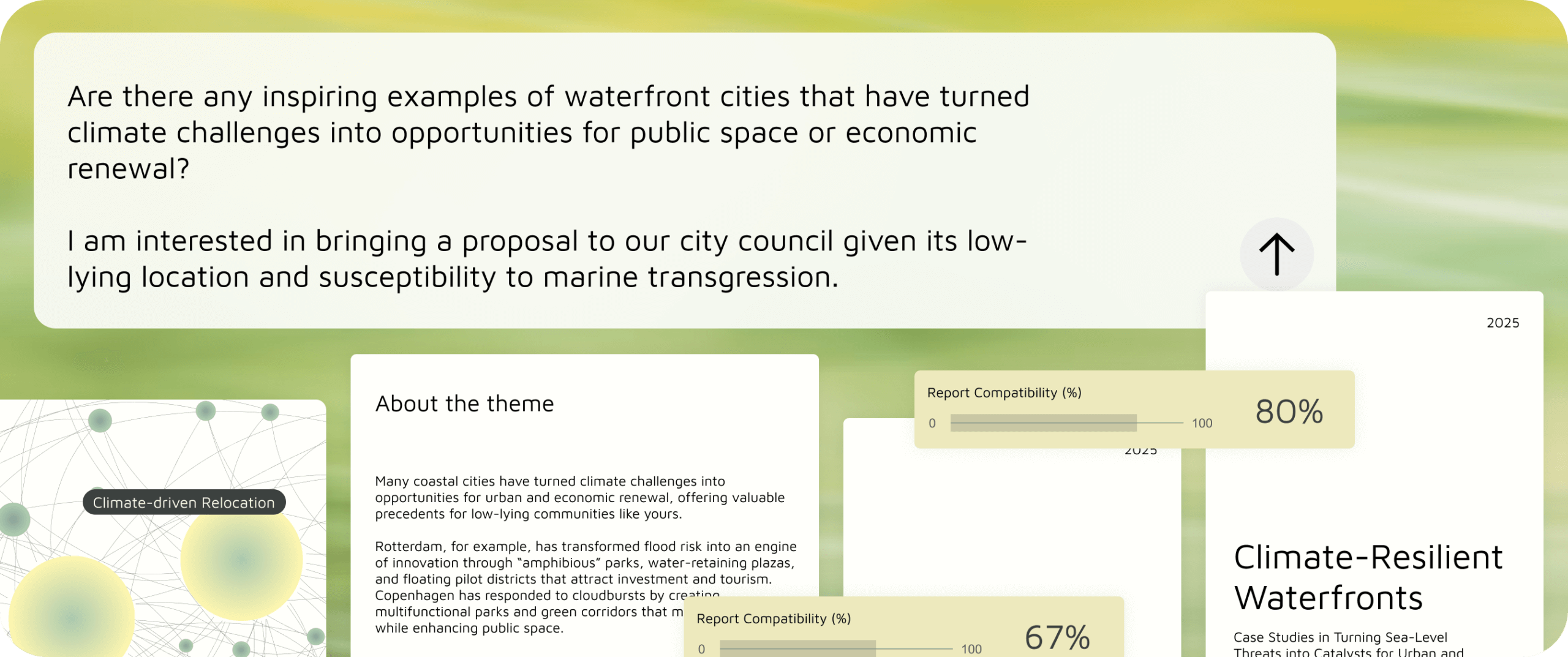
What if the corpus itself became navigable? Not just searchable, but explorable.
Here’s how we would reimagine it today:
- Visual corpus intelligence
When a user lands on the platform, they see the landscape of knowledge at a glance. Topic clusters show the dominant themes. Geographic coverage reveals where evidence is strong (and where gaps exist). A timeline shows how focus has shifted over time. Before searching, users understand what’s there to find. - An intelligent query interface
Move beyond string matching. Let users ask questions in plain English, with context: “What approaches have worked for flood resilience in Southeast Asian cities under 2 million people?” The system returns synthesised insight across relevant sources, with attribution so users can validate and go deeper. - Smarter discovery
Help users find what they did not know to ask for. Related content suggestions based on what they’re exploring. Quick insight cards that surface key findings before committing to a long read. Timely prompts that connect current news to the underlying evidence base.
How this works
The approach is straightforward: combine proven AI services with modern data visualisation and good interface design.
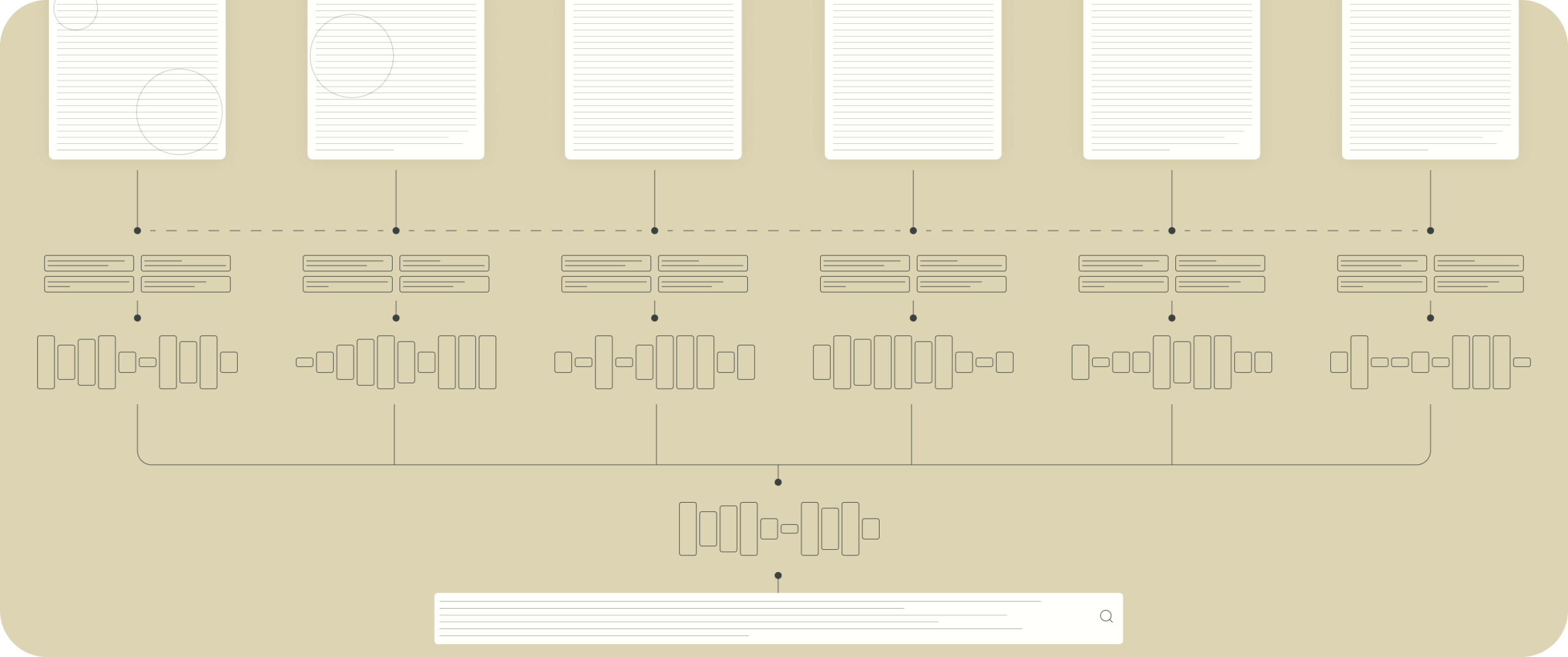
We would process the document repository to extract themes and concepts, cluster documents by topic (not just manual tags), and create an interactive map of the corpus. Users can explore clusters, filter quickly, and see where to focus.
On top of that, an intelligent search layer adds contextual retrieval and synthesis. When someone asks a question, the system pulls the most relevant sources and returns a response with clear references.
This is not about inventing new technology. It’s about applying what already exists in a disciplined way, so the experience feels genuinely useful.
Why this matters
The gap between “organised” and “intelligent” is where most knowledge systems fail. Categorisation helps, but it rarely accelerates decision-making on its own.
Intelligence means understanding relationships between concepts, anticipating what users need next, and presenting information in ways that reduce effort and increase confidence.
This is not about replacing expertise. It’s about removing the friction that stops experts using their judgement where it counts.
What comes next
Over the coming weeks, we’ll share three more reimagined projects:
- CyberSeek: What happens when job market data becomes personalised career intelligence?
- Sport England: Can participation data transform how we measure policy impact?
- Nest: How do you turn raw energy data into visual narratives that actually change behaviour?
If any of this feels familiar in your organisation, tell us what system you wish worked better.